Retatrutide brings hunger and fuel use into the same treatment.
Retatrutide is a 39-amino-acid chain; amino acids are small parts used to make proteins. Three hormone effects work together. Learn how hunger, sugar, and liver fat may change.
Eating less is only part of the proposed effect
Designed to copy several hormone effects, retatrutide is still a test drug. This page explains how the drug may change your hunger, sugar, and liver fat. Hormones carry messages around your body. Retatrutide acts where cells receive GLP-1, GIP, and glucagon messages.
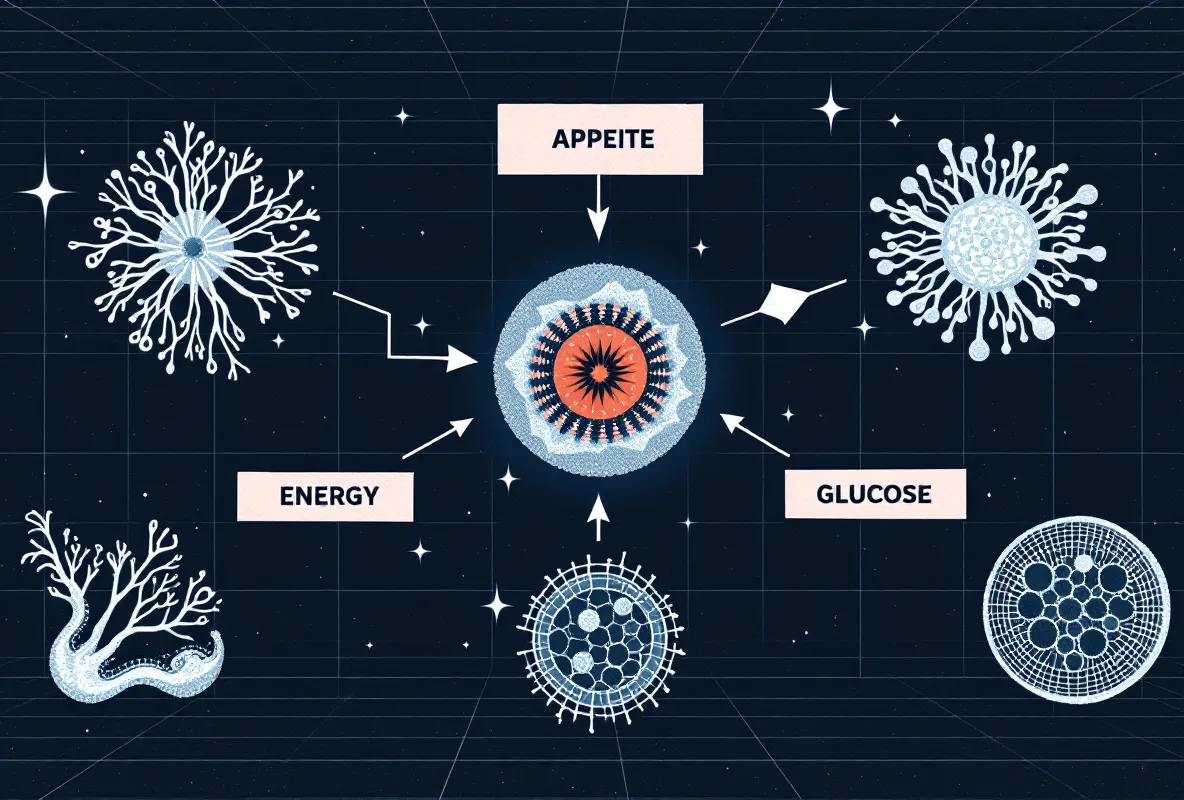
GLP-1 reduces hunger, helping you want less food. GIP helps release insulin after eating. Glucagon increases calorie use while you're resting. Phase 2 means early tests of benefit in people. Those tests reported larger weight losses than separate reports involving drugs that copy fewer hormone effects, but you can't choose a better treatment for yourself from studies of different groups alone.
Glucagon also helps break apart stored liver fat for fuel. GLP-1 drugs chiefly help liver fat by reducing eating and weight. Retatrutide adds glucagon to those GLP-1 effects. The smaller liver study found a −82.4% change in stored fat [5]. That result concerns less fat, rather than proven healing of scars.
GLP-1 helps you feel full and release insulin when needed
GLP-1 is a hormone your gut releases after a meal. The hormone sends messages to your brain and pancreas, your insulin-making gland. GLP-1 reduces hunger. Meals pass out of your stomach at a slower pace, extending fullness. You may want less to eat.
The insulin effect depends on sugar being high in your blood. Retatrutide helps release insulin in response to raised sugar. Older drugs can push insulin release without that link to need. Linking release to high sugar may lower the risk of sugar dropping too far. Your other diabetes medicines can still add to that risk.
Researchers tested cells, rather than measuring people's meals or weight [3]. Retatrutide activated the cells' GLP-1 response less strongly than the body's own GLP-1. That weaker cell response was chosen deliberately. The designers gave GIP and glucagon larger roles while retaining GLP-1's help with hunger and insulin. Cell tests don't establish exactly how full you'll feel or how much weight you'll lose. Those answers need studies of people.
GIP adds help with insulin after you eat
GIP is another hormone released after meals. Like GLP-1, GIP helps your pancreas, the insulin-making gland, release insulin. In healthy people, those two hormones account for most insulin released after eating. GIP also affects how fat cells use and store fuel. Your sugar and fat handling may change through more than reduced hunger.
Tests in cells found the GIP response strongest among retatrutide's three effects [3]. Researchers chose that strength. GIP appears to add to GLP-1's help with hunger and insulin. The effects share some actions and differ in others. A strong response in cells still doesn't prove a particular benefit for you.
Phase 2 means an early test of whether treatment helps people. Weight fell −24.2% over 48 weeks in that study, more than separate reports for GLP-1 drugs alone [1][6]. Added GIP effects may help explain the difference, alongside glucagon's increase in fuel use. Researchers haven't worked out how much loss comes from each effect.
Glucagon helps stored liver fat become fuel
Glucagon is a hormone from your pancreas, the gland that also makes insulin. Glucagon raises blood sugar, while insulin lowers sugar. Glucagon can also increase calorie use while you rest. Your liver may break apart more stored fat and use the fat as fuel.
Too much fat collects when the liver receives and makes more than it can use or send elsewhere. Glucagon may increase how quickly that stored fat is used. GLP-1 drugs copy a hunger hormone and mainly help by reducing eating and weight. An added effect inside the liver may help in another way.
The smaller liver test was a 48-week study. With 12 milligrams, scans showed liver fat down −82.4% after 24 weeks. Normal liver fat, below 5%, was reached by 86% [5][7]. Those figures don't prove existing scars healed. A 2025 review described several effects acting together: using liver fat for fuel, eating less, and burning more calories [7]. You still need evidence about lasting liver health.
In cells, retatrutide's glucagon response was weaker than the response to the body's own glucagon [3]. Researchers sought fat-burning benefits without making blood sugar rise. Keeping that effect weaker didn't remove every concern. In Phase 2, early tests in people, the highest amounts raised average pulse by about 5 to 7 beats per minute. Glucagon can speed your heartbeat as well as fuel use. Your lasting heart safety depends on longer studies, rather than improved liver scans alone.
Cell studies showed where retatrutide attaches and starts responses
A 2024 study examined frozen protein samples to see retatrutide attached to cells [3]. Researchers used a special microscope to see the shapes closely. The work was published in Cell Discovery. No patients' weight or symptoms were measured in these tests. You can learn about attachment, rather than personal treatment results.
The cell parts receiving hormone messages changed shape around retatrutide. Some of those cell parts formed firm spirals; another formed a flexible loop. These were parts of the cells, rather than the drug's shape. The differences help explain why retatrutide starts stronger responses at some attachment places than others.
The GIP response was strongest; glucagon and GLP-1 responses were weaker [3]. The arrangement of retatrutide's protein parts and attached fat helped produce those differing strengths. Researchers chose those features to bring the three effects together in one drug. The close-up views supported their explanation of attachment, but didn't measure people's health, so those views can't establish which benefits will last in you or which harms might appear over longer use.
You can read the retatrutide research in people and see their retatrutide results.